
For centuries, humans have been captivated by the idea of building machines that mimic life. From ancient Greek philosophers sketching out intricate water clocks to Leonardo da Vinci designing robotic knights, the magic lies in turning static material into dynamic, working motion. We call these wonders automata—machines designed to operate autonomously.
Today, this fascination continues, but you no longer need a medieval workshop to experience it. You can explore the satisfying principles of mechanical engineering right on your kitchen table.

The Original ‘DIY’ Builders
The history of intricate clockwork and automata is a journey through ingenuity. The Antikythera Mechanism, discovered in a Roman shipwreck, is perhaps the most famous example. Created by ancient Greeks, this device was a highly complex gear train used to predict astronomical positions and eclipses. It was, in essence, the world’s first analog computer.
This passion for mechanical precision didn’t stop. It fueled the Renaissance, gave us the first reliable clocks, and inspired inventors like Jacques de Vaucanson, whose 18th-century Digesting Duck could “eat” and “digest” grain, astonishing the European elite.
Why does this matter? Because the simple satisfaction you get from seeing a wooden gear mesh perfectly with another, or watching a tiny mechanical spring wind up, connects you directly to this long, fascinating human history.

The Unexpected Benefits of Building a Mechanism
While assembling a mechanical model today might seem like a simple hobby, it offers some profound, measurable benefits:
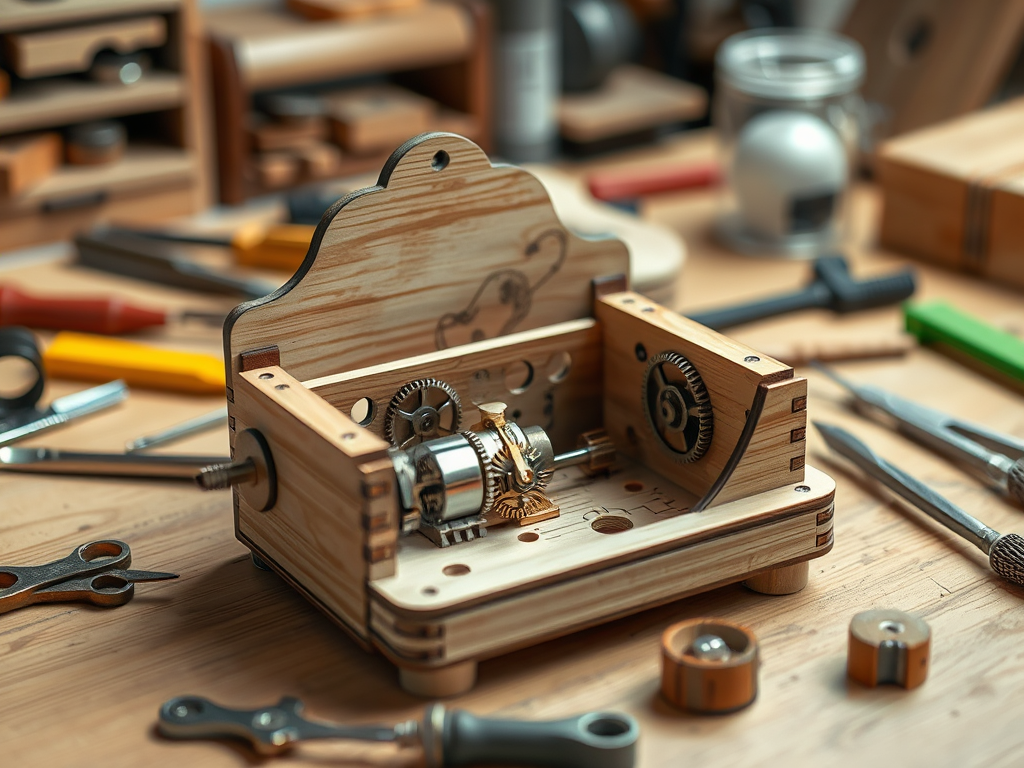
- A Lesson in Kinematics: Building a music box or a carousel is an incredible hands-on way to learn about physics, motion, and mechanics. You are literally creating a gear reduction system to convert a fast spring wind into a slow, sustained rotation—a core principle of engineering.
- Mindfulness in Motion: Unlike digital puzzles, building a 3D mechanical model forces you to slow down and focus intensely on a tangible object. Assembling dozens of interlocking parts, where one misaligned piece stops the entire mechanism, requires patience and deep concentration—a truly therapeutic experience.
- The ‘A-Ha!’ Moment: There is pure joy in the final wind-up. When the delicate wooden gears turn, the hidden musical movement plays, and your creation comes to life, that satisfying “A-ha!” moment is the ultimate reward.
If you’re curious about the mechanics behind these historical masterpieces, reputable sites like the Smithsonian Institution offer fantastic resources on the history of clockwork and invention. You can also explore detailed diagrams and explanations of simple machines on educational websites like HowStuffWorks.
Start Your Own Mechanical Legacy Today
Ready to move beyond reading about history and start building it?
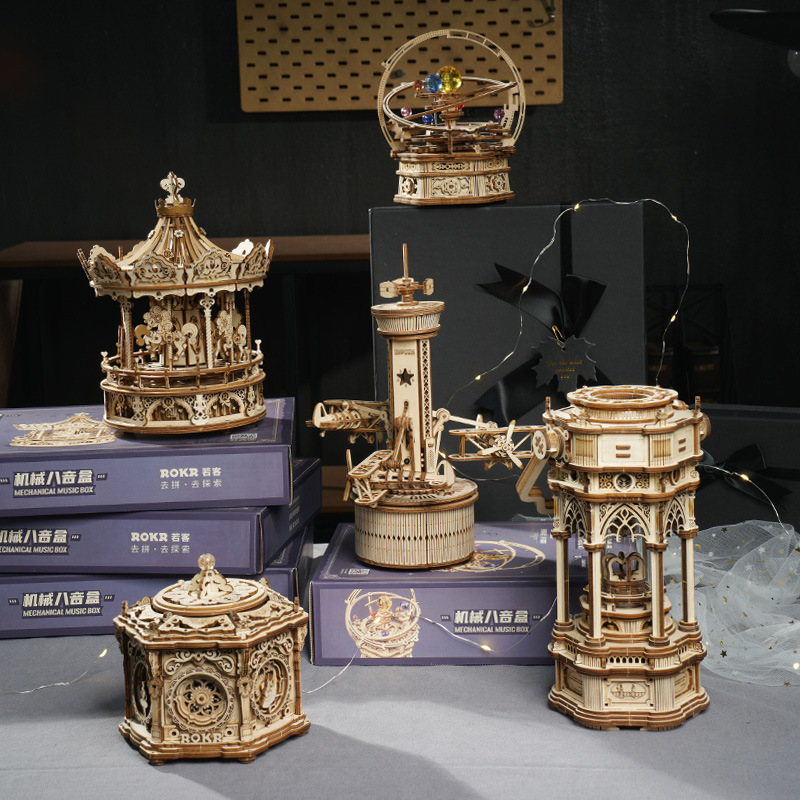
You don’t need years of training in clockmaking to bring these beautiful principles to life. Our collection of DIY 3D Wooden Mechanical Music Box Kits gives you everything you need to build your own working automata. Choose from intricate designs like the Secret Garden, Romantic Carousel, or Victorian Lantern, and assemble a stunning, no-glue-required model that plays beautiful music.
Find your perfect mechanical masterpiece and start building today
Leave a Reply