
Light Up Your Sound: Why a DIY Music Spectrum Kit is the Ultimate Electronic Hobby
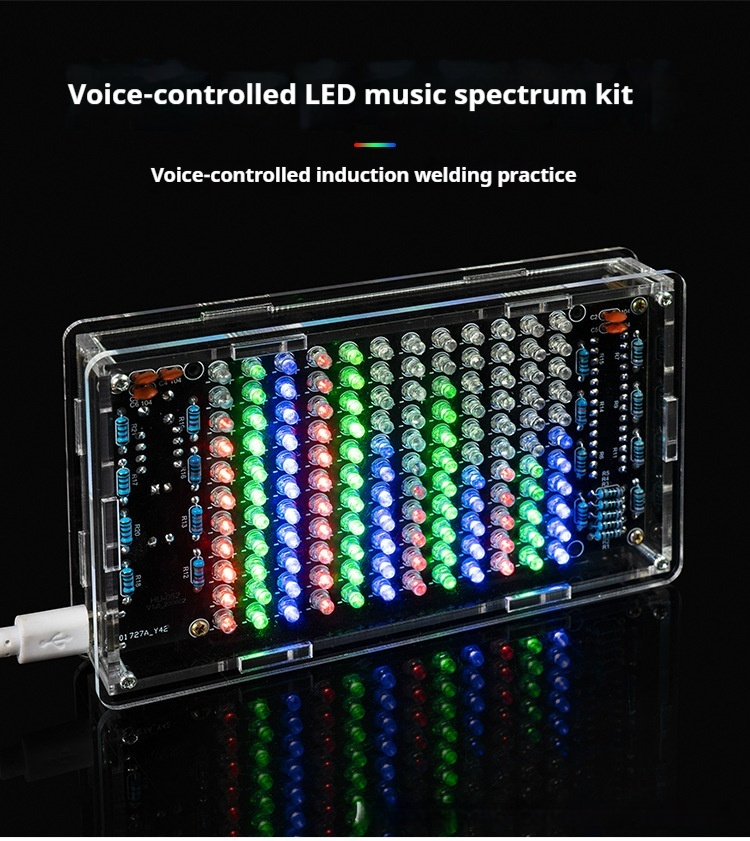
Introduction: More Than Just Listening
Music is an immersive experience, but have you ever wished you could see the beat? From the pulsing bass line to the shimmering hi-hats, a song’s hidden energy is in its frequency composition. The world of electronics offers a unique way to bridge the gap between sound and sight. Building a DIY Music Spectrum analyzer is a hands-on project that transforms your desktop into a personal light show, giving you a dynamic new appreciation for every track you play. It’s an accessible blend of art, audio, and engineering that’s perfect for hobbyists, students, and music lovers alike.
The Science Behind the Show: Understanding Frequency
Every sound you hear is a complex wave, and a spectrum analyzer breaks that wave down into its individual frequencies. Think of it like a sound fingerprint. Lower frequencies (bass and kick drums) appear on one side of the display, while higher frequencies (vocals and cymbals) appear on the other. This process is called audio signal processing.
A voice-controlled LED spectrum kit, like the one we’re discussing, uses a sensitive microphone or pickup to capture the ambient sound. A microcontroller then quickly analyzes the frequencies and translates them into vertical bars of light on an LED matrix. This instantaneous reaction to the music is what makes the display so captivating. If you’re curious to dive deeper into how frequency analysis works, checking out an introductory physics resource on sound waves is a great starting point.
A Fun Way to Learn: The Appeal of the DIY Music Spectrum Kit
Why choose a kit over buying a pre-built display? Simply put, the learning is built into the build!
- Mastering the Skill: These kits are excellent for practicing through-hole soldering, an essential skill for any electronic hobbyist or aspiring engineer. The repetitive nature of soldering the LED matrix and resistors helps you perfect your technique.
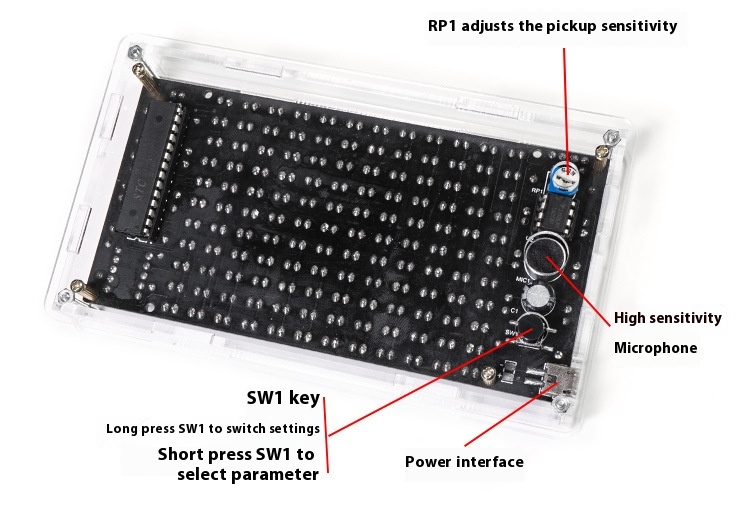
- Understanding Components: As you assemble the circuit board, you’ll learn about the different components: the potentiometer (RP1) used to adjust pickup sensitivity, the high-sensitivity microphone, and the main control chip.
- Customization is Key: A high-quality DIY Music Spectrum analyzer offers customizable settings. You can often adjust the display’s refresh rate (how fast the bars move), the audio response sensitivity, and even the sampling frequency to fine-tune the visualization to your specific taste or environment.
The Desktop Upgrade: A Conversation Starter
Once assembled and housed in its protective, clear acrylic shell, the finished product is not just a learning tool—it’s a sophisticated piece of desktop décor. It’s small, saves space, and adds a modern, tech-forward aesthetic to any desk, gaming setup, or bedside table. Imagine having friends over: this glowing, pulsing piece of self-made tech is an instant conversation starter.
Ready to See the Sound?
Building your own music visualizer is a deeply rewarding project that provides both educational value and a spectacular end product. If you’re looking for a challenging but approachable electronic hobby that results in a beautiful, functional piece of equipment, look no further.
Click here to get your complete Voice-Controlled LED Music Spectrum Kit and start building your sound experience today!
Leave a Reply